01
Application and interview
Share your background, values, and goals. Then speak with Renee about whether this pathway fits your practice.
Learn Canine Cognitive Restructuring Therapy with Renee Rhoades, MSc. Built for trainers, behavior professionals, and veterinary teams who want to look past surface reactions and address the core emotion driving behavior.
Register interest only. No payment or reserved placement required.


“The most transformative thing we can do for a struggling dog is help them understand that their world is safe.”
Renee Rhoades, MSc · Founder, Your Dog Behaviorist
Canine Cognitive Restructuring Therapy is a science-led, welfare-first, strictly force-free framework. It helps professionals look past the surface behavior and understand what the dog is experiencing.
The work is not only about changing what a dog does. It is about helping that dog feel safer, more confident, and better understood.
Gain a respected qualification designed to raise standards in the field, backed by clinical rigor and evidence-informed methodology.
Establish your authority as a Certified Practitioner equipped to handle complex emotional behavior cases with confidence and clarity.
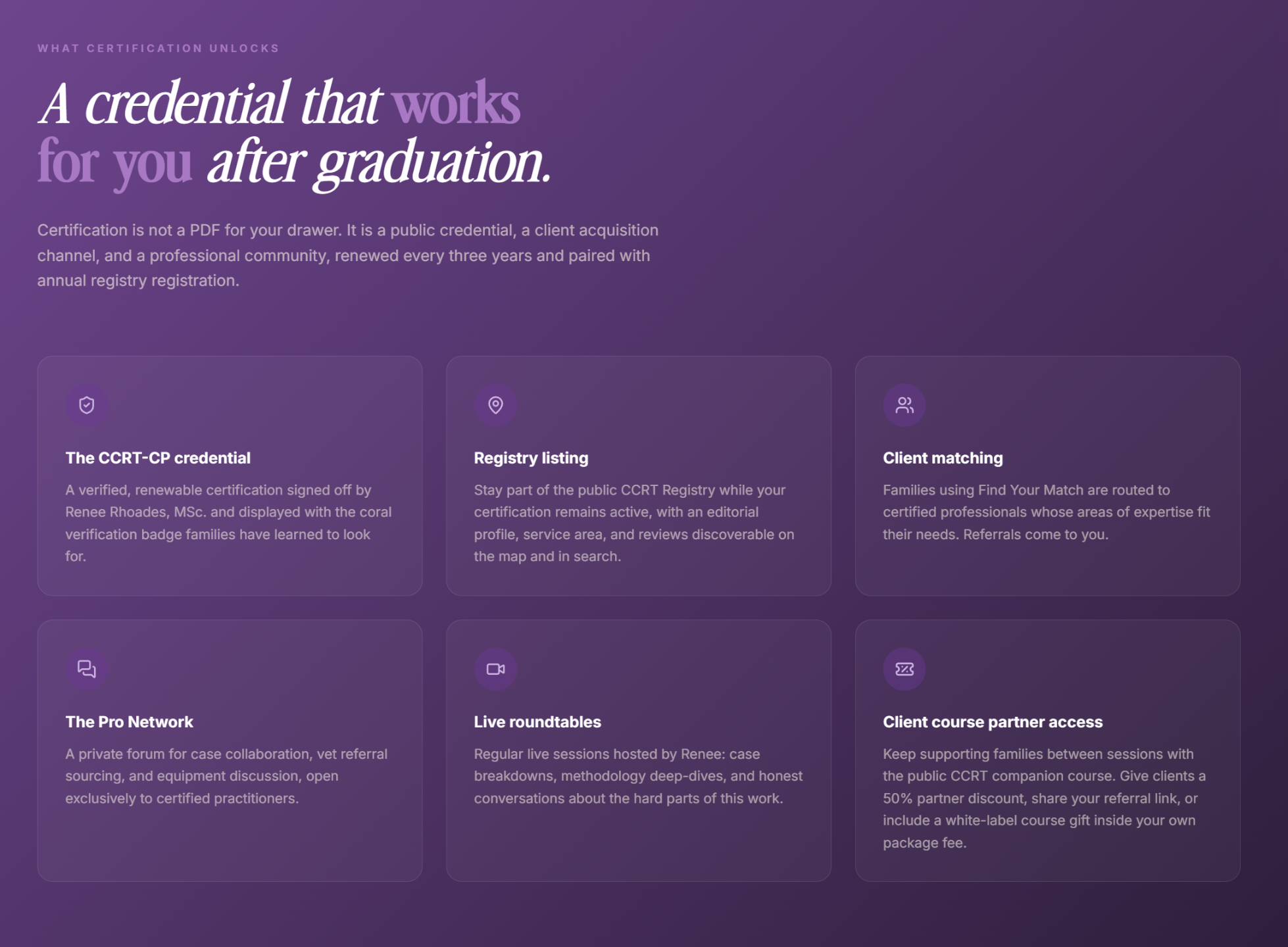
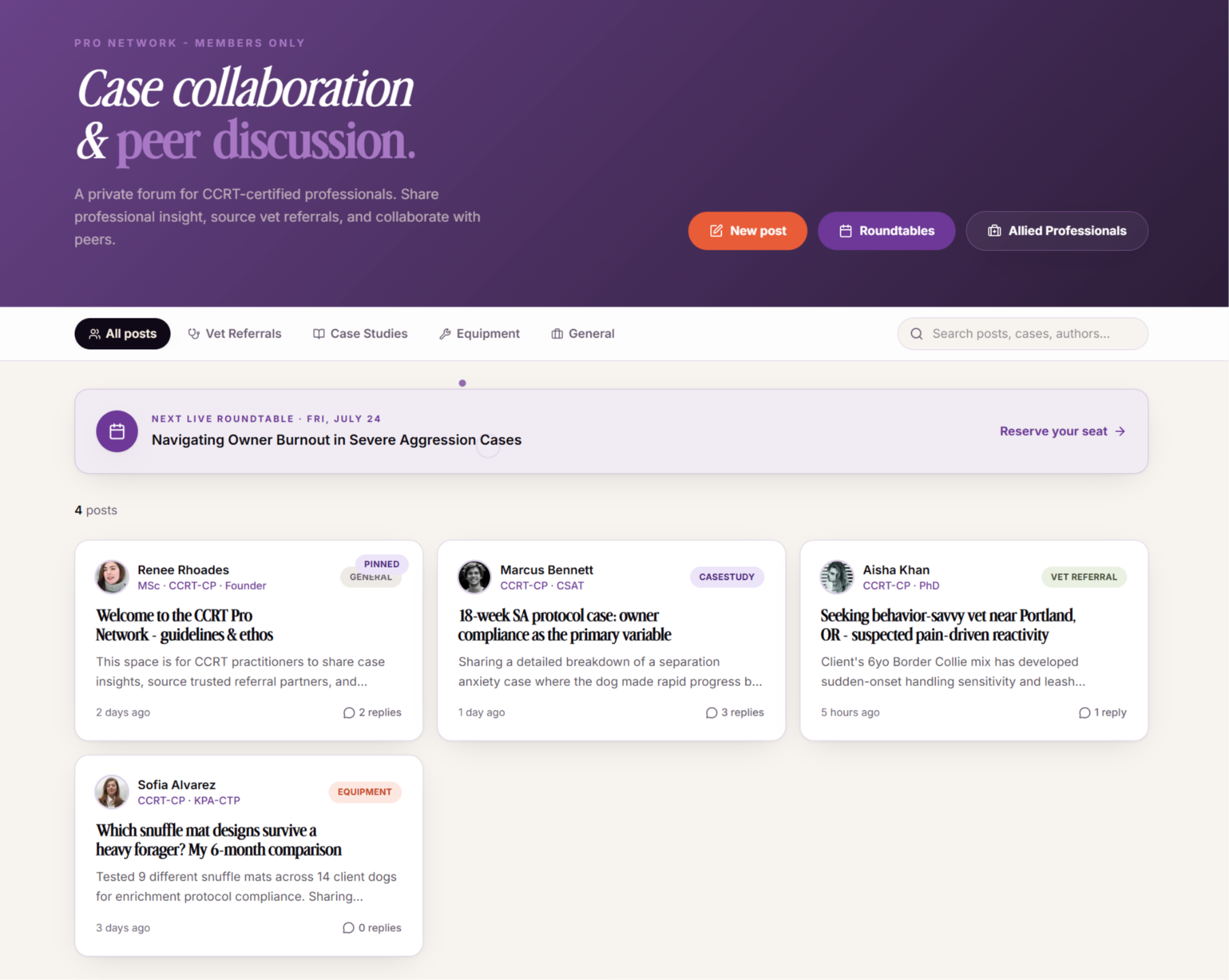
Experience dedicated peer discussion, case review forums, and direct access to Renee Rhoades, MSc in the private practitioner community.
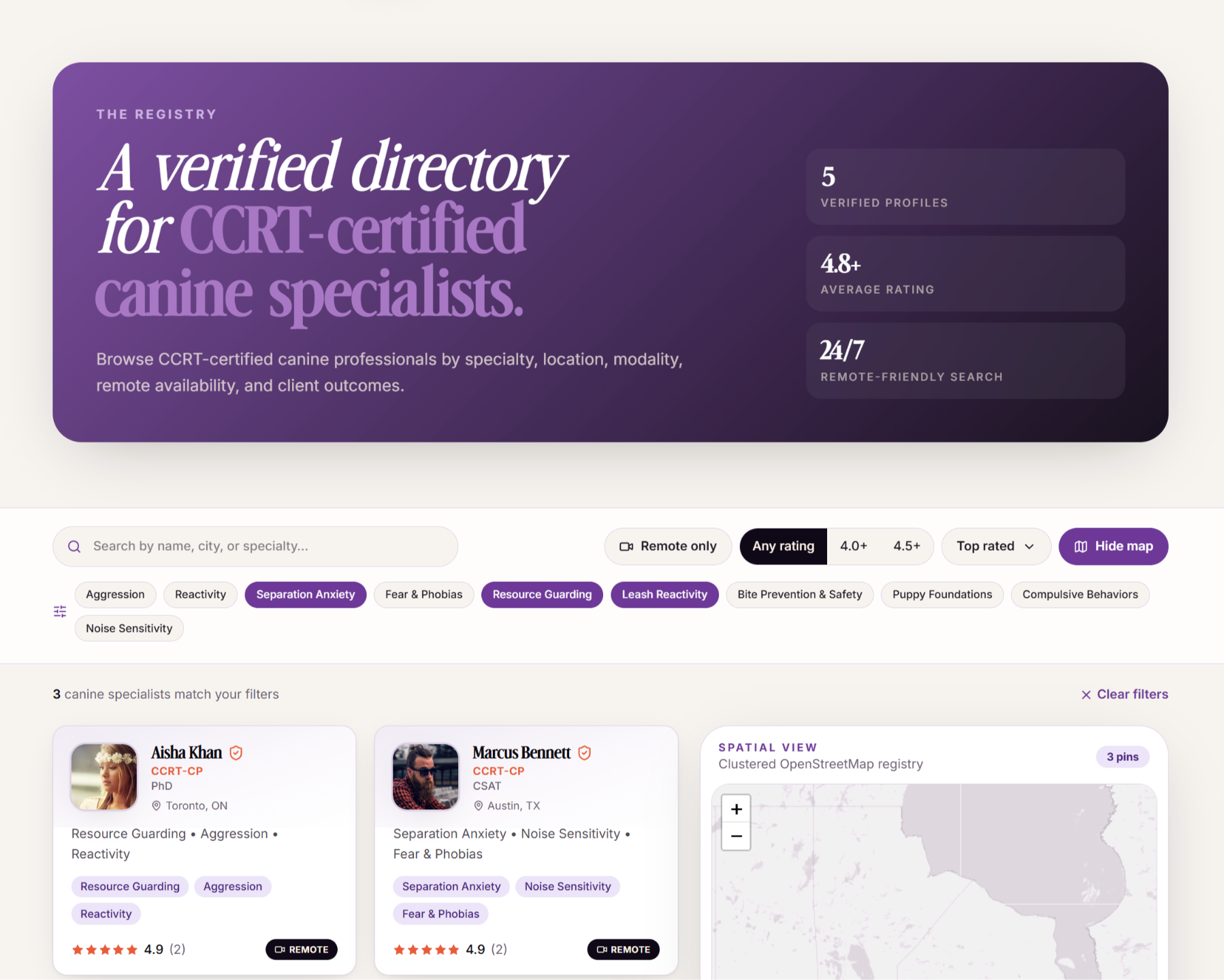
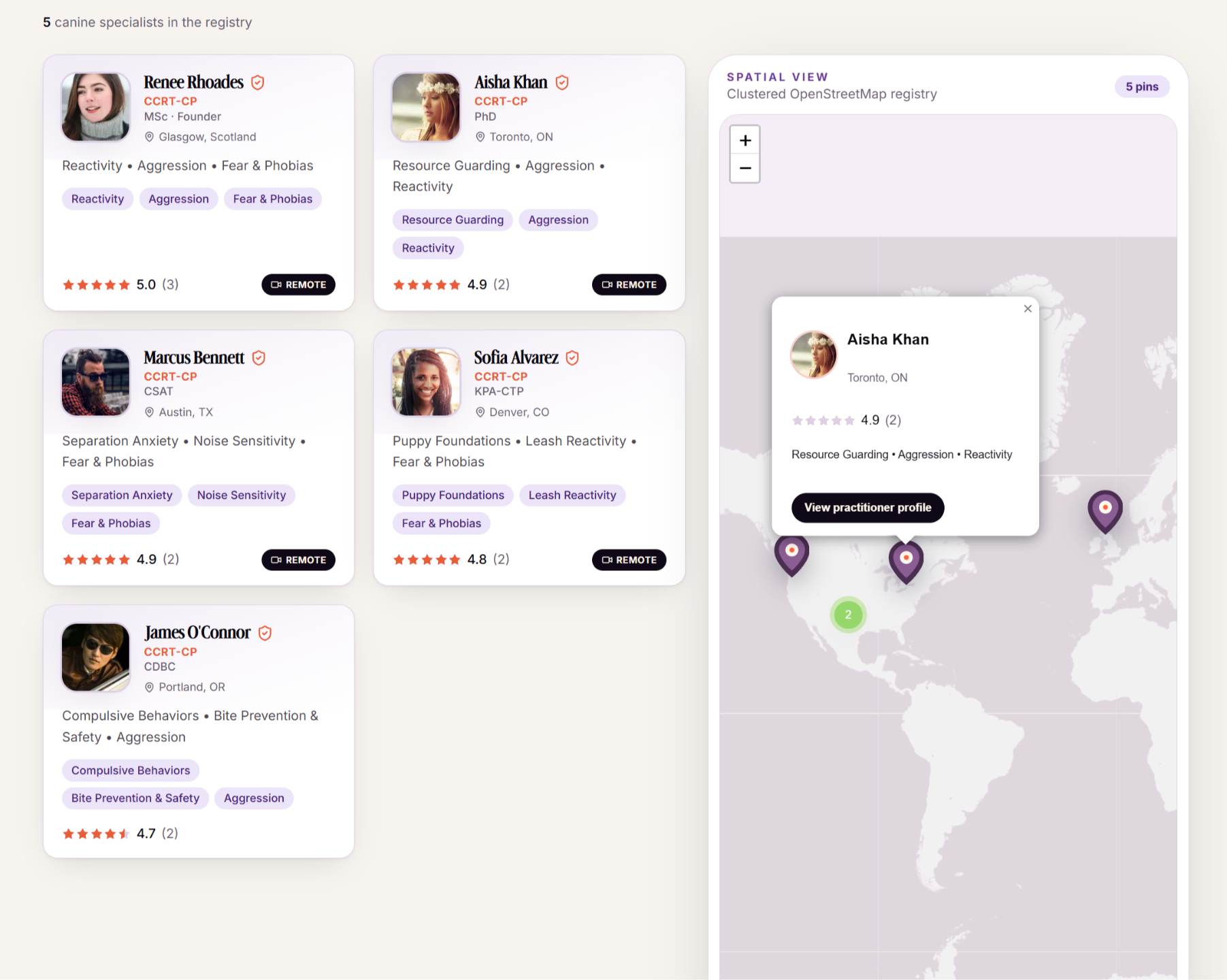
Graduates receive visibility on the official CCRT Registry to showcase their qualification to clients and canine networks.
A structured route through application, live study, supervised casework, and assessment. Built for professionals who want their clinical thinking examined and strengthened.
Share your background, values, and goals. Then speak with Renee about whether this pathway fits your practice.
Complete structured reading, guided study, and video analysis across about 16 weeks of live teaching.
Apply the framework with three supervised cases, including recorded review and detailed feedback.
Finish with a written assessment and a live case review that shows how you think through real work.
These are proposed focus areas, not final modules. Content, order, and structure may change before launch.
Affective neuroscience, stress physiology, body language, and observable emotional states.
History-taking, video analysis, and pain screening so casework starts with a clearer picture.
Change how a dog appraises a trigger, rather than only suppressing the reaction that follows.
Build plans around individual dogs, goals, contexts, and your professional scope.
Coach clearly, support follow-through, handle hard conversations, and reduce burnout.
Force-free and LIMA principles, scope boundaries, veterinary collaboration, and ethics.
You do not need to have everything figured out. You do need curiosity, welfare-first values, and a willingness to have your thinking challenged.
We will email you about information events, application dates, cohort announcements, and final program details.
Leave your details and we'll contact you for important updates.

Get started today before this once in a lifetime opportunity expires.